
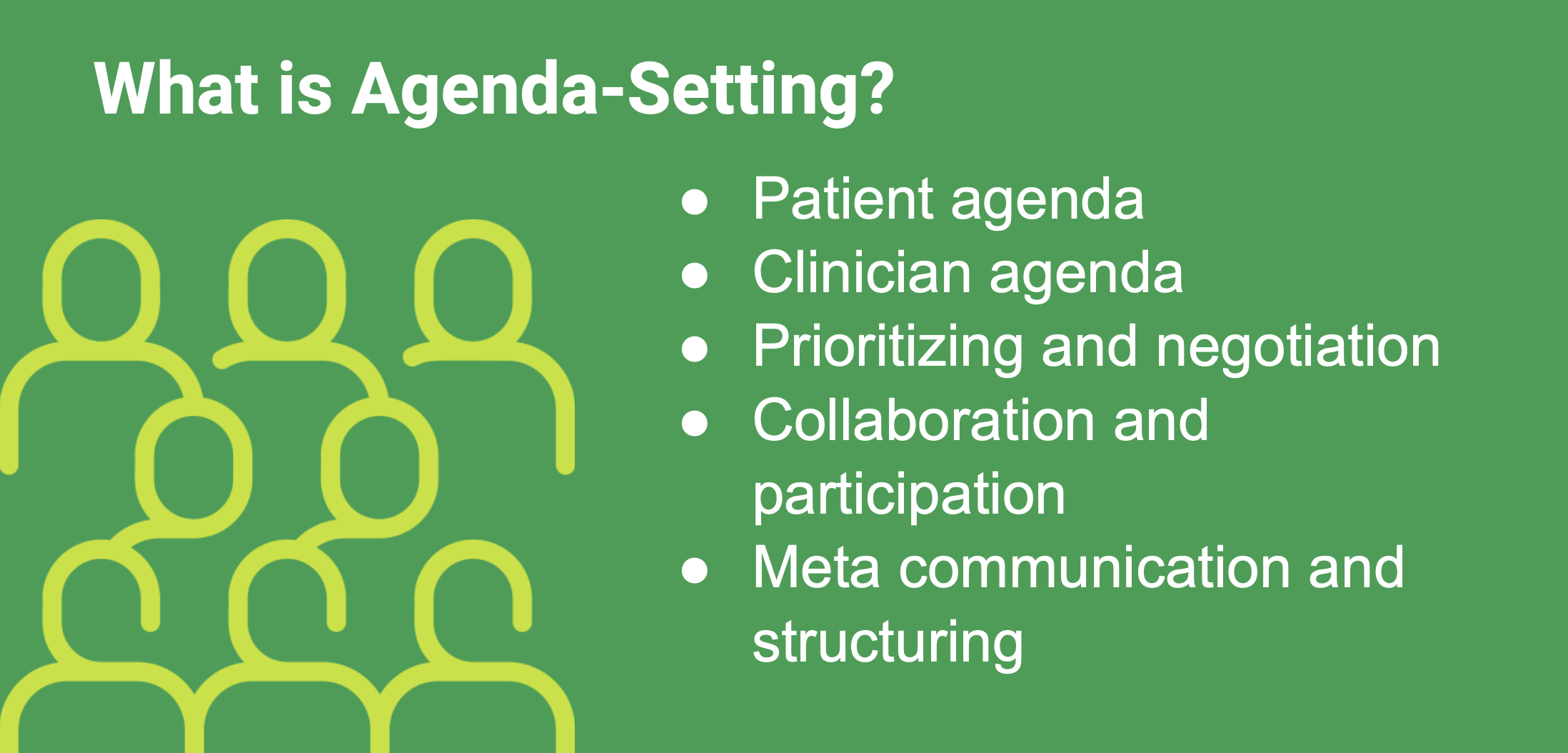
Why is Agenda-Setting Important?
- Reduce the “doorknob” phenomenon
- Enhances understanding of patients’ concerns
- Fosters patient-centered care
- Particularly relevant for older adults and those with serious illnesses, like chronic kidney disease (CKD)
- Rarely practiced by clinicians


The ASK Study
The Healthcare Experience (HEx) Lab is currently conducting studies on the use of agenda-setting tools within clinical visits, particularly for serious illness topics. These tools aim to facilitate discussions between patients and healthcare providers by focusing on patient priorities, such as what they want to talk about during the visit. By promoting structured communication, the HEx Lab is investigating whether agenda-setting improves aspects like patient self-advocacy, self-management, and healthcare utilization.
Ongoing studies in collaboration with Dartmouth Hitchcock Nephrology clinic include interviews and observations, open pilot trials. These projects explore the integration of agenda-setting into routine clinical care and its broader impact on patient outcomes. Through these research initiatives, the HEx Lab seeks to better understand and enhance patient-centered communication in clinical settings, particularly for those facing serious illness.

Our Agenda-setting studies
The ASKids! Study

Ongoing Study: The ASKids! Study.
Title: Centering children and care partners in complex pediatric hospital stays: Developing an inpatient agenda-setting intervention for multidisciplinary family meetings
Funded by a Dartmouth Synergy Clinical and Translational Science Institute SYNERGY Translational Pilot Award. National Center for Advancing Translational Sciences of the National Institutes of Health (NCATS) UM1TR004772 2025-2026 $50,000, PI Saunders. MPI Reese.
Observational Study

 Main Page